What it is
A prime is a whole number above 1 that only 1 and itself divide evenly. The first few are 2, 3, 5, 7, and 11. Their gaps change.
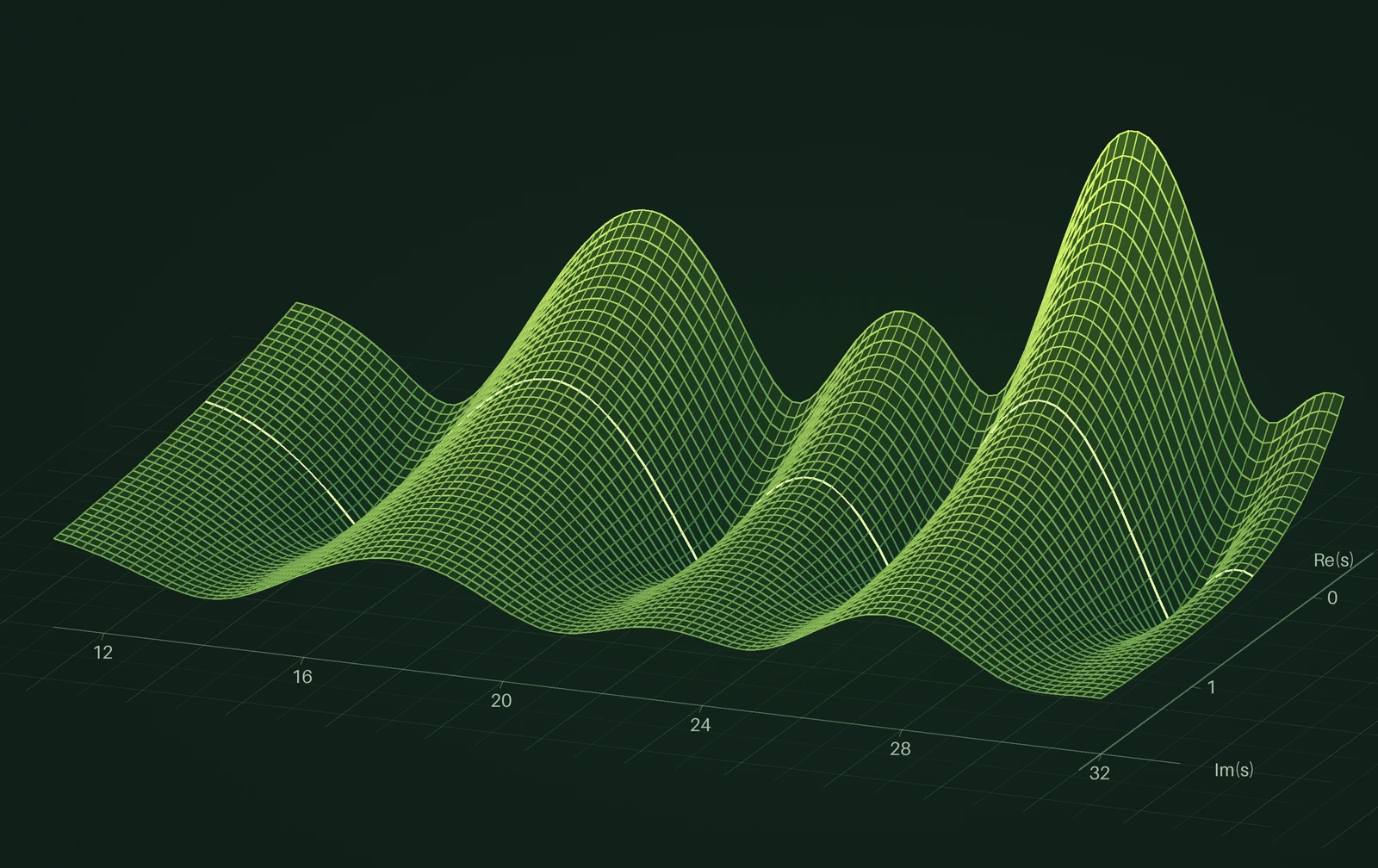
In 1859, Riemann studied primes using a function called zeta. A zero is an input that makes the function give 0.
Set aside the zeros at −2, −4, −6, and so on. Riemann’s claim is that every other zero sits on the vertical line halfway between 0 and 1.
Why it matters
Count the primes up to 100 and you find 25. A formula estimates about 30. For this small example, we can see that the estimate misses by about 5.
Now imagine counting up to a number with a hundred digits. Listing the primes one by one would take too long. An estimate is much easier to get.
The line puts a limit on how far the estimate can miss. It tells us how much to trust a prime count even for numbers that huge.
Exact count25
Estimate≈ 30
x = 100